
Unilever Exits Food

Unilever Exits Food
The age of the FMCG super-conglomerate is ending
For decades, the logic of giant consumer conglomerates was simple.
Own everything.
Soap. Ice cream. Shampoo. Tea. Mayonnaise. Detergent. Skincare. Frozen food. Toothpaste. Snacks.
Scale was the strategy.
The bigger the portfolio, the stronger the distribution leverage, manufacturing power, retail negotiation, and marketing efficiency.
That model built empires.
Now the model is cracking.
When companies like Unilever begin pulling away from parts of food, it signals something much bigger than portfolio restructuring. It signals that modern consumer behaviour no longer rewards broadness the way it once did.
The old FMCG machine was designed for mass-market predictability.
Modern consumers behave more like fragmented microcultures.
And food categories are increasingly becoming difficult terrain for legacy giants.
_______________________________________
Food became culturally unstable
Food used to be operationally simple.
Large brands won through shelf dominance, pricing power, and habitual purchasing behaviour.
Consumers bought what was available.
Now food operates like culture.
Health trends shift monthly. Ingredients become political. Consumers obsess over protein one year and gut health the next. TikTok can create overnight demand for categories that barely existed six months earlier.
Speed became critical.
Large corporations struggle with speed.
Especially in food.
The operational complexity alone slows adaptation. Reformulation cycles, supply chain coordination, retailer negotiations, and regulatory layers make fast movement difficult.
Meanwhile, smaller challenger brands move aggressively.
The result is predictable.
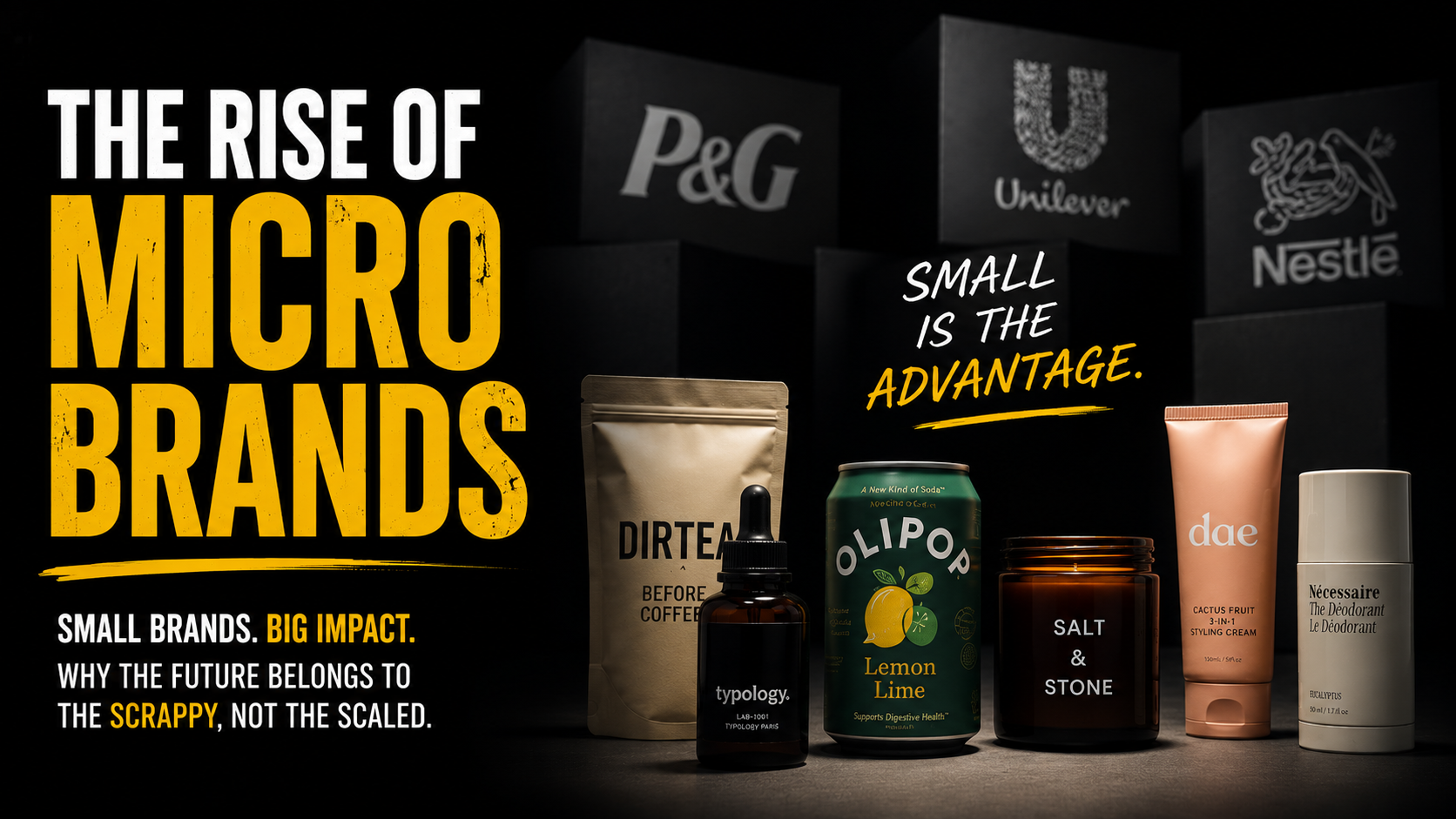
Large FMCG companies increasingly dominate legacy volume while smaller brands dominate emerging relevance.
That is a dangerous long-term position.
_______________________________________
Margin pressure is changing the game
Food is also becoming less attractive financially.
Commodity volatility, supply chain disruption, inflation, and retailer pressure have squeezed margins heavily in many categories.
Compare that to beauty.
Or wellness.
Or premium personal care.
The economics are dramatically better.
A premium skincare product can achieve margins many food brands can only dream about.
Which means conglomerates are increasingly asking uncomfortable questions.
Why stay heavily exposed to lower-growth, lower-margin, operationally difficult categories when capital performs better elsewhere?
That logic drives restructuring.
Not sentiment.
_______________________________________
Younger consumers do not trust food giants the same way
This part matters enormously.
Trust dynamics changed.
Younger consumers increasingly associate large food corporations with artificiality, overprocessing, health concerns, environmental damage, or outdated industrial systems.
Whether fully fair or not is irrelevant.
Perception shapes behaviour.
Smaller food brands often appear cleaner, more transparent, more ethical, and more culturally aligned.
That perception creates pricing power.
Ironically, many challenger brands win before consumers even taste the product.
The branding does the work first.
Minimal packaging.
Ingredient transparency.
Founder stories.
Lifestyle positioning.
The emotional framing changed entirely.
Food branding now behaves more like fashion branding than industrial packaged goods.
Legacy corporations were not built for that environment.
_______________________________________
Retail no longer controls discovery
Historically, supermarkets controlled visibility.
If you owned shelf space, you owned attention.
Today discovery increasingly happens online.
Consumers encounter products through creators, social feeds, health influencers, podcasts, niche communities, and recommendation algorithms before they ever enter a store.
That changes competitive dynamics dramatically.
Smaller food brands can now build demand digitally before negotiating retail distribution.
Which weakens one of the greatest advantages large corporations historically possessed.
Shelf dominance still matters.
But it no longer guarantees cultural dominance.
And increasingly, culture drives purchasing behaviour.
_______________________________________
Large food portfolios became strategically messy
Another issue is focus.
Conglomerates built through decades of acquisitions often end up operating enormous portfolios with wildly different strategic realities.
Ice cream behaves differently from plant-based nutrition.
Condiments behave differently from wellness beverages.
Consumer expectations evolve differently across each category.
Growth patterns differ.
Margins differ.
Innovation cycles differ.
At some point, the complexity becomes inefficient.
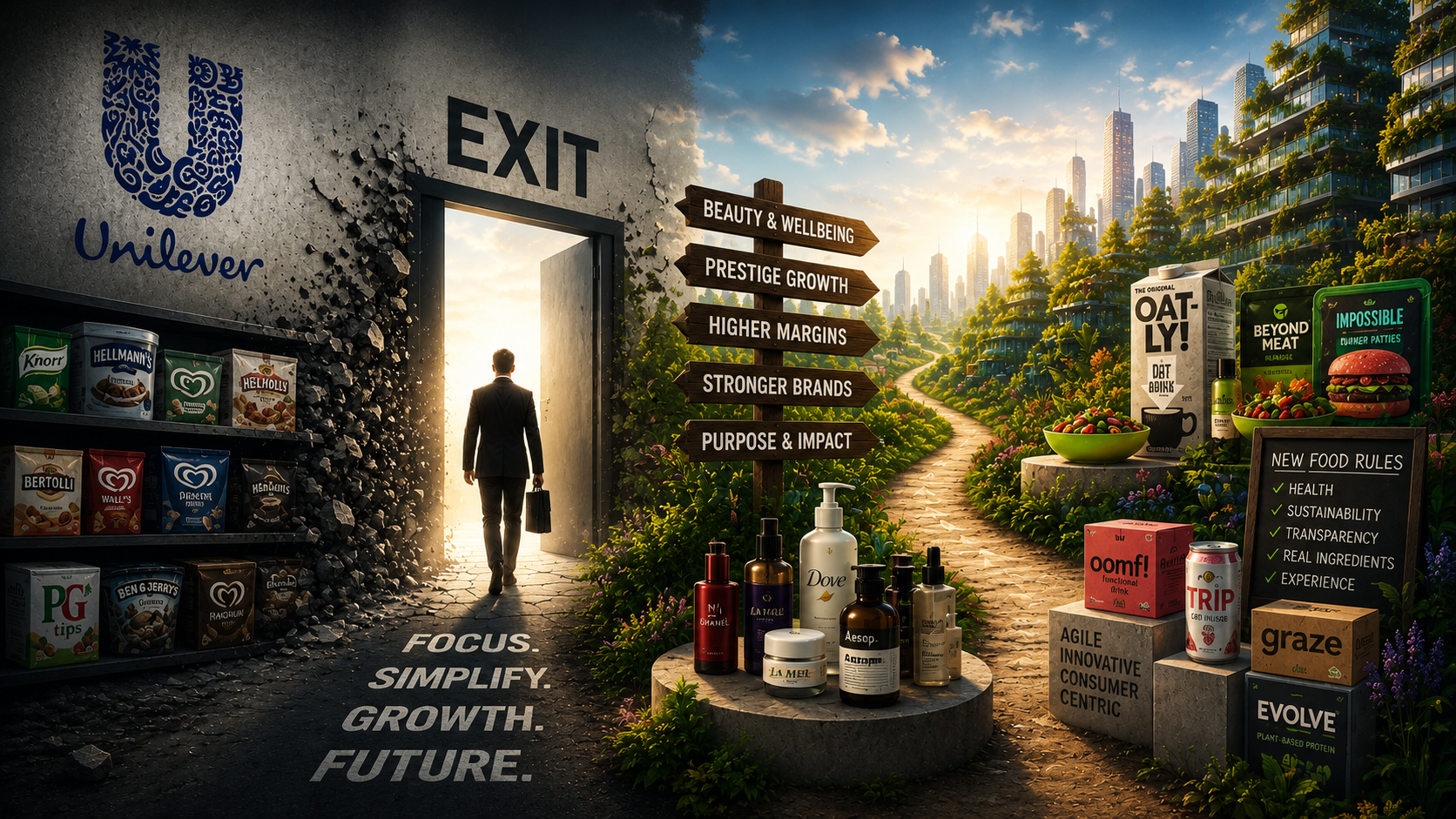
This is why many global companies are simplifying.
Fewer categories.
Stronger concentration.
More investment behind areas with higher future potential.
The era of “own everything” is slowly being replaced by “own the most strategically valuable things.”
_______________________________________
The wellness economy changed food forever
Food used to compete mainly on taste, convenience, and price.
Now it competes against wellness identity.
Consumers increasingly evaluate products through the lens of:
• Longevity
• Mental health
• Fitness
• Gut health
• Protein
• Functional ingredients
• Sustainability
• Clean labels
• Lifestyle alignment
This transforms food from commodity into self-optimisation.
That is a completely different emotional framework.
The winners in this environment are often brands capable of feeling specialised.
Scientific.
Authentic.
Focused.
Large conglomerates often struggle to communicate those qualities credibly because consumers perceive them as too industrial.
That perception gap matters.
_______________________________________
The future belongs to fewer, stronger ecosystems
Ironically, companies like Unilever exiting parts of food may actually strengthen them long term.
Because the future likely belongs to tighter brand ecosystems with clearer strategic coherence.
Not sprawling portfolios built primarily for scale.
The strongest future consumer companies will likely focus heavily on:
• Premiumisation
• Wellness
• Beauty
• Personal care
• Functional consumption
• Lifestyle positioning
• High-margin emotional categories
Food increasingly behaves like a battlefield of fragmentation and rapid cultural volatility.
That makes it difficult terrain for giant bureaucratic systems.
_______________________________________
This is not the death of food giants
Important distinction.
Large food corporations are not disappearing.
Scale still matters enormously.
Supply chains still matter.
Distribution still matters.
Global manufacturing still matters.
But scale alone no longer guarantees emotional relevance.
And emotional relevance is increasingly where pricing power comes from.
The companies that survive this transition will be the ones capable of combining operational scale with cultural agility.
That is extremely difficult.
Most organisations are built for one or the other.
Not both.
_______________________________________
Closing
Unilever stepping away from parts of food is not just a portfolio decision.
It is a signal.
A signal that the old FMCG model built around massive category ownership is slowly evolving into something narrower, sharper, and more strategically selective.
Food is no longer merely industrial consumption.
It became identity.
Lifestyle.
Wellness.
Culture.
And in environments driven increasingly by speed, specificity, and emotional perception, giant legacy systems lose some of the advantages they once depended on.
The future consumer economy will likely reward companies that are not simply large.
But culturally adaptive.
Because increasingly, relevance moves faster than scale.