The Decline of Alcohol

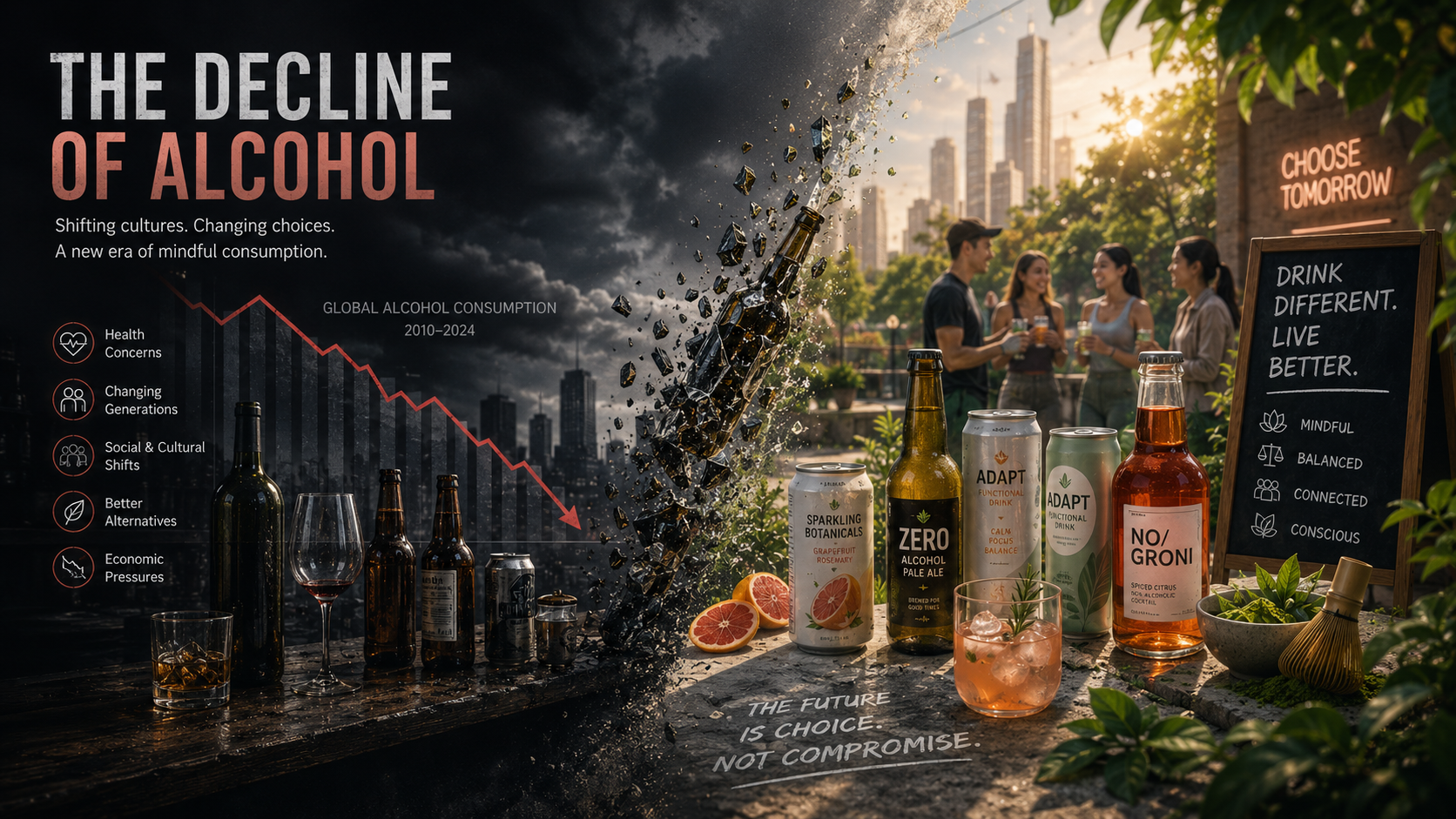
The Decline of Alcohol
Alcohol is losing its cultural monopoly
For most of modern history, alcohol occupied a privileged social position.
Celebration meant alcohol.
Networking meant alcohol.
Dating meant alcohol.
Luxury meant alcohol.
Adulthood itself often meant alcohol.
Entire industries, rituals, and social structures were built around it.
Now something unusual is happening.
Younger generations are drinking less.
Not slightly less.
Structurally less.
And the implications stretch far beyond beverage sales.
Because alcohol is not merely a product category.
It is a cultural system.
When consumption patterns shift, culture shifts with them.
_______________________________________
Gen Z changed the social equation
One of the clearest drivers behind alcohol decline is generational behaviour.
Gen Z approaches alcohol differently from previous generations.
Historically, drinking symbolised freedom, rebellion, social belonging, and adulthood.
But younger consumers grew up inside permanently documented digital environments.
Every mistake can become content.
Every bad night can become searchable.
That changes risk perception.
Previous generations could disappear into the night.
Gen Z grew up under surveillance culture.
Social media made self-image permanent.
Which means losing control publicly became far less attractive.
Sobriety increasingly signals discipline, wellness, productivity, and self-awareness.
That is a dramatic cultural reversal.
_______________________________________
Wellness became status
This may be the biggest transformation of all.
For decades, excess signalled status.
Luxury dining.
Expensive whiskey.
Champagne culture.
Late nights.
Now optimisation signals status.
Fitness.
Sleep quality.
Mental clarity.
Cold plunges.
Protein intake.
Longevity.
Performance.
The modern aspirational consumer increasingly treats the body less like something to indulge and more like something to manage strategically.
Alcohol conflicts with that mindset.
It damages sleep.
Hurts recovery.
Impacts mental performance.
In wellness-oriented cultures, alcohol increasingly behaves like friction.
Not aspiration.
_______________________________________
Consumers still want the ritual
Important nuance.
People are not necessarily rejecting social ritual.
They are rejecting intoxication.
That distinction explains the explosive growth of:
• Non-alcoholic spirits
• Functional beverages
• Adaptogenic drinks
• Premium sparkling water
• Sophisticated zero-proof cocktails
• Wellness beverages
Consumers still want social participation.
They still want ceremony.
They still want identity signalling.
But increasingly without the physical cost.
The opportunity therefore is not simply “less alcohol.”
It is replacement ritual.
The brands understanding this shift earliest are winning aggressively.
_______________________________________
Alcohol branding stopped evolving culturally
Many alcohol brands still communicate using outdated emotional frameworks.
Nightlife.
Partying.
Escape.
Masculinity.
Excess.
Traditional luxury.
But culture moved.
Especially online.
Modern consumers increasingly value:
• Authenticity
• Wellness
• Mental health
• Balance
• Productivity
• Emotional intelligence
• Self-control
The emotional codes surrounding alcohol therefore feel increasingly disconnected from emerging identity systems.
Especially among younger urban audiences.
_______________________________________
The internet changed social behaviour
Historically, drinking often functioned as social infrastructure.
Bars.
Clubs.
Parties.
Shared physical environments.
But digital life transformed socialisation itself.
Gaming.
Discord.
Streaming.
Group chats.
Creator ecosystems.
Online communities.
Many younger consumers now socialise extensively without physical nightlife environments.
That reduces alcohol exposure naturally.
The relationship between social connection and drinking weakens.
That structural change matters enormously.
_______________________________________
Economic pressure also matters
Alcohol is expensive.
Especially premium alcohol.
In many cities, nightlife itself became economically difficult for younger consumers.
High rent.
Economic instability.
Rising living costs.
Expensive hospitality.
The economics of frequent drinking no longer feel sustainable for many consumers.
At the same time, younger audiences increasingly prioritise experiences differently.
Travel.
Fitness.
Technology.
Fashion.
Self-development.
Alcohol now competes against a broader range of lifestyle spending categories than it once did.
And increasingly, it loses.
_______________________________________
Sobriety lost its stigma
Historically, refusing alcohol often required explanation.
Now moderation increasingly feels socially acceptable.
Or even aspirational.
That is culturally significant.
Movements like “sober curious” helped normalise reduced drinking without requiring full sobriety identity.
Consumers no longer see alcohol choices as binary.
They fluidly move between drinking and non-drinking occasions.
This flexibility weakens habitual consumption patterns.
Which historically drove enormous portions of industry revenue.
_______________________________________
Premiumisation may save parts of the industry
Ironically, while total consumption may decline, premiumisation may still strengthen profitability for some brands.
Consumers increasingly drink less frequently but more selectively.
That creates opportunities for:
• Craft products
• High-end spirits
• Luxury positioning
• Experiential hospitality
• Collectible consumption
The future alcohol market may therefore become smaller in volume but stronger in premium value.
Mass consumption weakens.
Occasion-based consumption strengthens.
_______________________________________
The future of alcohol is identity repositioning
The biggest challenge facing alcohol brands is not operational.
It is emotional.
They must redefine what alcohol means culturally.
Because the old narratives are losing power.
Future successful alcohol brands may need to position around:
• Craftsmanship
• Taste sophistication
• Moderation
• Ritual
• Experience
• Social connection
• Wellness balance
Not reckless excess.
The industry is slowly moving from intoxication marketing toward lifestyle integration.
That transition will define the next decade.
_______________________________________
Closing
Alcohol is not disappearing.
But its cultural dominance is weakening.
Younger generations are reshaping consumption through wellness culture, digital behaviour, economic pressure, and changing social identity systems.
The future consumer increasingly values optimisation over excess.
Control over escapism.
Function over intoxication.
And the brands that survive will not simply sell alcohol.
They will sell modern social ritual.
Because increasingly, consumers still want connection.
They just no longer want the hangover.