
Asia Brand Conference 2027

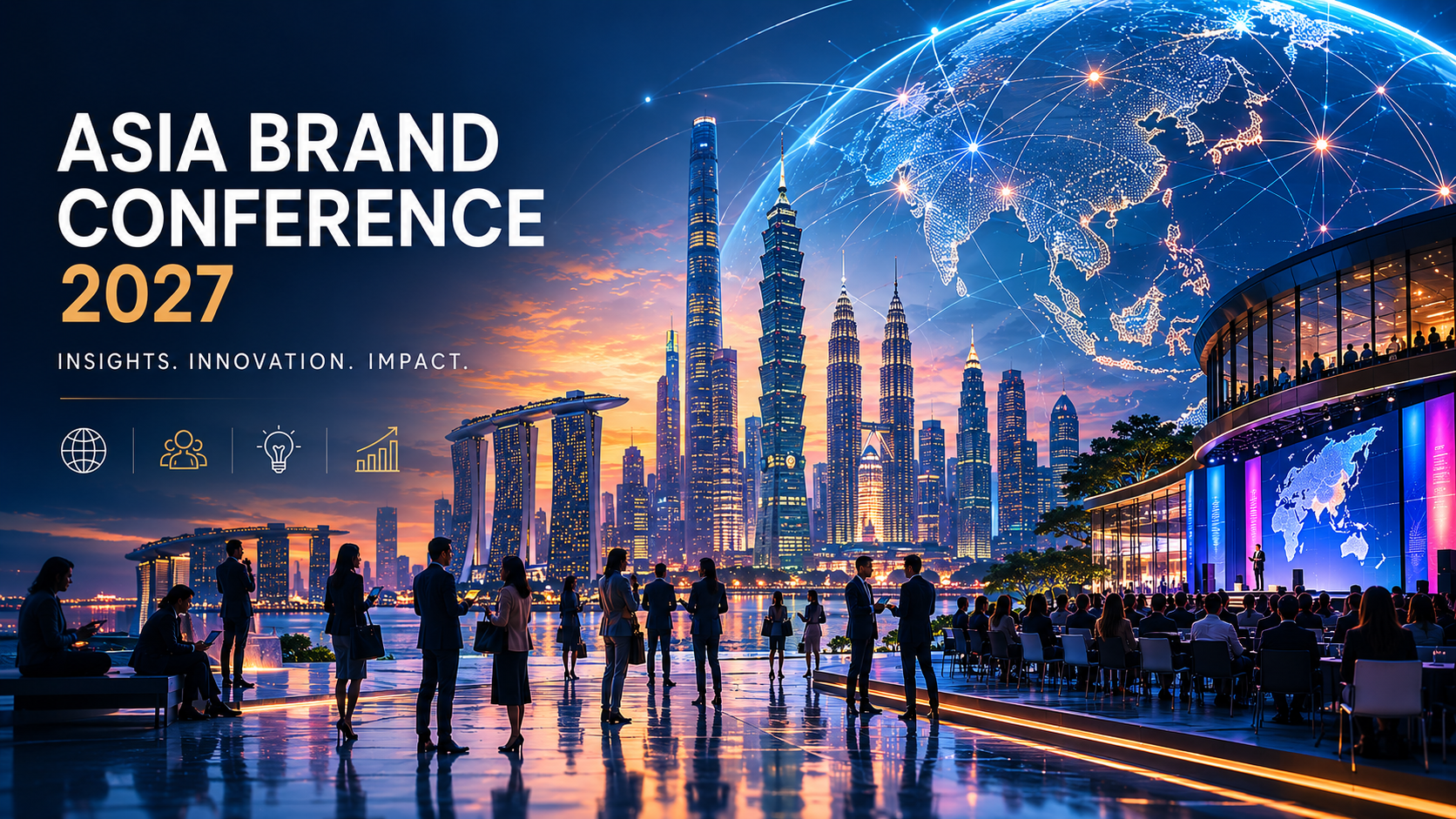
Asia Brand Conference 2027
Asia is no longer following global branding trends
It is increasingly creating them.
For years, global branding conversations were dominated by Europe and the United States.
Western agencies defined the frameworks.
Western case studies shaped the industry.
Western consumer behaviour drove strategy models.
That era is shifting.
Asia is becoming one of the most important brand laboratories in the world.
Not simply because of population size.
But because of behavioural speed.
Digital adoption.
Platform innovation.
Commerce integration.
Mobile ecosystems.
Creator economies.
Social behaviour.
Consumer intensity.
The future of branding may increasingly be previewed in Asia first.
Then exported globally later.
_______________________________________
Asia operates at internet speed
Many Asian markets evolved digitally under different conditions from Western economies.
In several regions, mobile technology leapfrogged traditional infrastructure entirely.
Consumers adapted quickly.
Which created unusually advanced digital behaviour.
Social commerce.
Livestream shopping.
Super apps.
Integrated payment ecosystems.
Creator-driven retail.
Gamified commerce.
These behaviours became normal in parts of Asia years before Western markets fully understood them.
This matters enormously because branding increasingly behaves like platform interaction rather than traditional advertising.
And Asia already operates comfortably inside that environment.
_______________________________________
The future consumer is hybrid
One of Asia’s greatest strategic advantages is behavioural hybridity.
Consumers move fluidly between:
• Physical and digital commerce
• Luxury and street culture
• Global and local identity
• Tradition and futurism
• Community and individualism
This creates unusually dynamic consumer environments.
Brands therefore need to operate with far greater cultural flexibility.
Rigid Western-style brand systems often struggle in these conditions.
Asian markets reward adaptability.
Speed.
Local nuance.
Emotional intelligence.
_______________________________________
Asian consumers are highly platform-native
This is another critical difference.
In many Asian markets, consumers are deeply integrated into platform ecosystems daily.
Shopping, messaging, entertainment, payments, creator interaction, delivery, gaming, and community behaviour often happen inside interconnected digital systems.
This changes how brands function.
Branding becomes less about isolated campaigns and more about ongoing ecosystem participation.
The brand is not merely communicating.
It is continuously interacting.
That interaction-heavy environment creates important lessons for the future global economy.
_______________________________________
Creator culture is accelerating faster in Asia
Asian creator ecosystems are evolving rapidly.
Particularly across:
• Beauty
• Fashion
• Gaming
• Food
• Technology
• Lifestyle commerce
Creators increasingly function as retail infrastructure, community leaders, and cultural translators simultaneously.
This deeply influences purchasing behaviour.
The distinction between influencer, entrepreneur, entertainer, and retailer continues collapsing.
Asia is not merely participating in this shift.
It is accelerating it.
_______________________________________
Asian branding is becoming visually bolder
Historically, much global premium branding followed minimalist Western design language.
Clean.
Muted.
Restrained.
Many emerging Asian brands behave differently.
More expressive.
More energetic.
More digitally native.
More comfortable with intensity.
This reflects broader internet culture shifts.
Modern consumers increasingly encounter brands through screens first.
Which rewards visual impact.
Motion.
Colour.
Distinctiveness.
Asia’s digital ecosystems adapted aggressively to those realities.
_______________________________________
The luxury market is shifting east
Luxury itself is increasingly shaped by Asian consumer behaviour.
Travel.
Fashion.
Beauty.
Hospitality.
Premium experiences.
The influence of Asian purchasing power continues growing globally.
Which means understanding Asian cultural dynamics is no longer optional for international brands.
It is strategic necessity.
Brands that fail to understand this shift risk building for outdated consumer assumptions.
_______________________________________
Asia is becoming a strategic branding hub
The future importance of conferences like Asia Brand Conference 2027 is not symbolic.
It is structural.
Because the branding industry increasingly needs:
• Cross-market intelligence
• Platform-native thinking
• Creator economy understanding
• Cultural agility
• Digital ecosystem strategy
• AI integration frameworks
• Consumer behaviour forecasting
Asia sits directly at the intersection of many of these transformations.
Which makes the region strategically important not merely as a market.
But as a predictive environment.
_______________________________________
The next era of branding will be multi-polar
The future brand economy will not be dominated by one cultural centre.
It will become increasingly multi-polar.
Ideas will emerge simultaneously from:
• Seoul
• Bangkok
• Singapore
• Shanghai
• Tokyo
• Jakarta
• Mumbai
• Dubai
• Los Angeles
• London
This decentralisation changes the entire industry.
Global branding increasingly means understanding multiple behavioural systems simultaneously.
The companies capable of navigating those complexities will dominate.
_______________________________________
The future belongs to adaptive brands
The biggest lesson emerging from Asia may be this:
Modern brands cannot remain static.
Consumers move too quickly.
Platforms evolve too rapidly.
Culture shifts too aggressively.
The future strongest brands will likely behave like adaptive systems.
Flexible.
Interactive.
Community-driven.
Platform-native.
Culturally responsive.
That evolution is already visible across many Asian markets.
_______________________________________
Closing
Asia is no longer simply adopting global branding frameworks.
It is increasingly shaping the future direction of the industry itself.
The region’s speed of digital behaviour, platform integration, creator ecosystems, and cultural hybridity make it one of the most important strategic environments in the modern consumer economy.
The future of branding will likely be faster, more interactive, more community-driven, and more digitally immersive than the industry historically expected.
And increasingly, many of those future behaviours are appearing in Asia first.
The brands paying attention now will have advantage later.
Because the future global consumer may already exist somewhere inside Asia’s digital ecosystems today.