
ANALYSIS
Unilever Exits Food
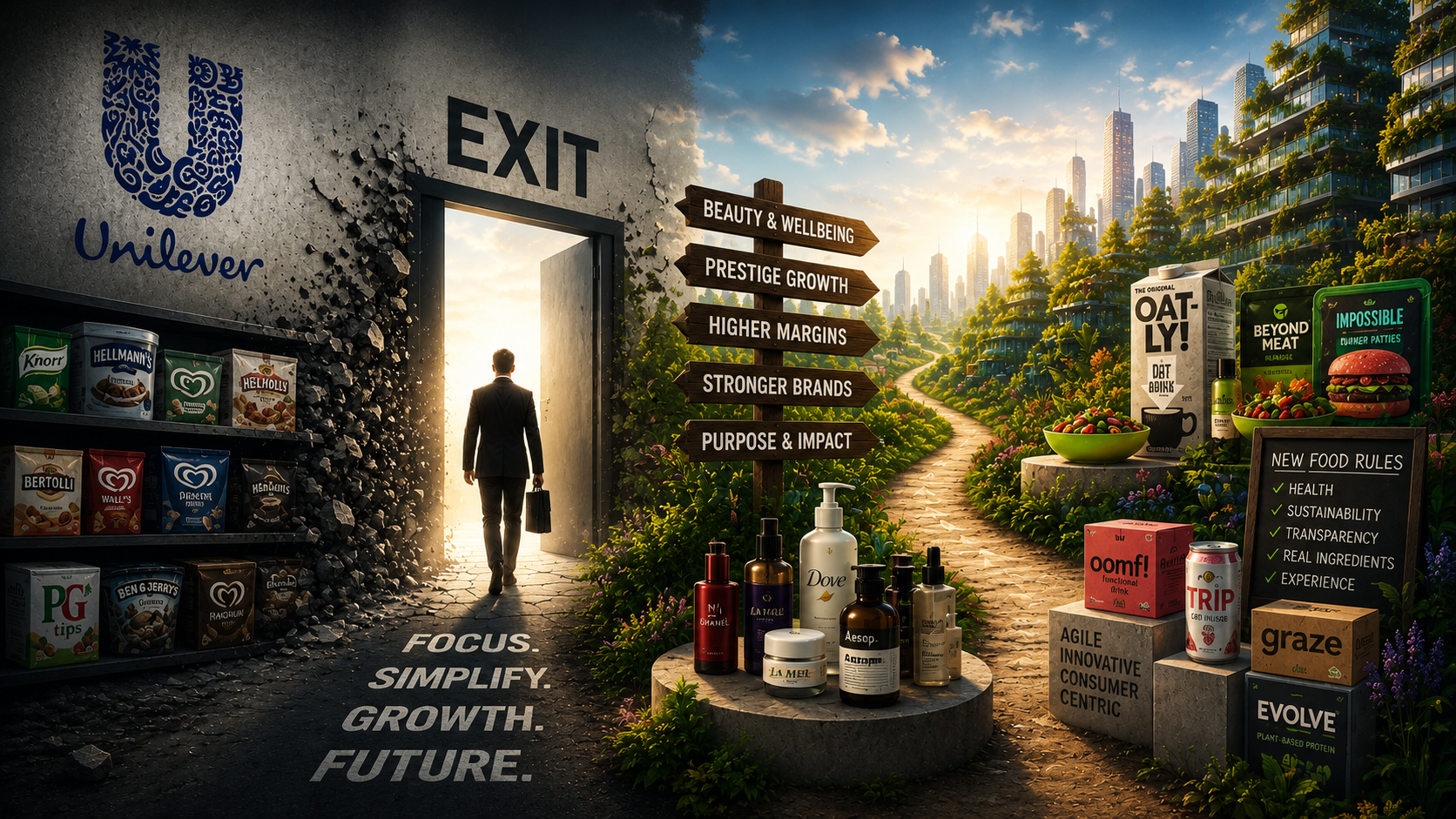
Unilever Exits Food The age of the FMCG super-conglomerate is ending For decades, the logic of giant consumer conglomerates was simple. Own everything. Soap. Ice cream. Shampoo. Tea. Mayonnaise. Detergent. Skincare. Frozen food. Toothpaste. Snacks. Scale was the strategy. The bigger the portfolio, the stronger the distribution leverage, manufacturing power, retail negotiation, and marketing efficiency. That model built empires. Now the model is cracking. When companies like Unilever begin pulling away from parts of food, it signals something much bigger than portfolio restructuring. It signals that modern consumer behaviour no longer rewards broadness the way it once did. The old FMCG machine was designed for mass-market predictability. Modern consumers behave more like fragmented microcultures. And food categories are increasingly becoming difficult terrain for legacy giants. _______________________________________ Food became culturally unstable Food used to be operationally simple. Large brands won through shelf dominance, pricing power, and habitual purchasing behaviour. Consumers bought what was available. Now food operates like culture. Health trends shift monthly. Ingredients become political. Consumers obsess over protein one year and gut health the next. TikTok can create overnight demand for categories that barely existed six months earlier. Speed became critical. Large corporations struggle with speed. Especially in food. The operational complexity alone slows adaptation. Reformulation cycles, supply chain coordination, retailer negotiations, and regulatory layers make fast movement difficult. Meanwhile, smaller challenger brands move aggressively. The result is predictable. Large FMCG companies increasingly dominate legacy volume while smaller brands dominate emerging relevance. That is a dangerous long-term position. _______________________________________ Margin pressure is changing the game Food is also becoming less attractive financially. Commodity volatility, supply chain disruption, inflation, and retailer pressure have squeezed margins heavily in many categories. Compare that to beauty. Or wellness. Or premium personal care. The economics are dramatically better. A premium skincare product can achieve margins many food brands can only dream about. Which means conglomerates are increasingly asking uncomfortable questions. Why stay heavily exposed to lower-growth, lower-margin, operationally difficult categories when capital performs better elsewhere? That logic drives restructuring. Not sentiment. _______________________________________ Younger consumers do not trust food giants the same way This part matters enormously. Trust dynamics changed. Younger consumers increasingly associate large food corporations with artificiality, overprocessing, health concerns, environmental damage, or outdated industrial systems. Whether fully fair or not is irrelevant. Perception shapes behaviour. Smaller food brands often appear cleaner, more transparent, more ethical, and more culturally aligned. That perception creates pricing power. Ironically, many challenger brands win before consumers even taste the product. The branding does the work first. Minimal packaging. Ingredient transparency. Founder stories. Lifestyle positioning. The emotional framing changed entirely. Food branding now behaves more like fashion branding than industrial packaged goods. Legacy corporations were not built for that environment. _______________________________________ Retail no longer controls discovery Historically, supermarkets controlled visibility. If you owned shelf space, you owned attention. Today discovery increasingly happens online. Consumers encounter products through creators, social feeds, health influencers, podcasts, niche communities, and recommendation algorithms before they ever enter a store. That changes competitive dynamics dramatically. Smaller food brands can now build demand digitally before negotiating retail distribution. Which weakens one of the greatest advantages large corporations historically possessed. Shelf dominance still matters. But it no longer guarantees cultural dominance. And increasingly, culture drives purchasing behaviour. _______________________________________ Large food portfolios became strategically messy Another issue is focus. Conglomerates built through decades of acquisitions often end up operating enormous portfolios with wildly different strategic realities. Ice cream behaves differently from plant-based nutrition. Condiments behave differently from wellness beverages. Consumer expectations evolve differently across each category. Growth patterns differ. Margins differ. Innovation cycles differ. At some point, the complexity becomes inefficient. This is why many global companies are simplifying. Fewer categories. Stronger concentration. More investment behind areas with higher future potential. The era of “own everything” is slowly being replaced by “own the most strategically valuable things.” _______________________________________ The wellness economy changed food forever Food used to compete mainly on taste, convenience, and price. Now it competes against wellness identity. Consumers increasingly evaluate products through the lens of: • Longevity • Mental health • Fitness • Gut health • Protein • Functional ingredients • Sustainability • Clean labels • Lifestyle alignment This transforms food from commodity into self-optimisation. That is a completely different emotional framework. The winners in this environment are often brands capable of feeling specialised. Scientific. Authentic. Focused. Large conglomerates often struggle to communicate those qualities credibly because consumers perceive them as too industrial. That perception gap matters. _______________________________________ The future belongs to fewer, stronger ecosystems Ironically, companies like Unilever exiting parts of food may actually strengthen them long term. Because the future likely belongs to tighter brand ecosystems with clearer strategic coherence. Not sprawling portfolios built primarily for scale. The strongest future consumer companies will likely focus heavily on: • Premiumisation • Wellness • Beauty • Personal care • Functional consumption • Lifestyle positioning • High-margin emotional categories Food increasingly behaves like a battlefield of fragmentation and rapid cultural volatility. That makes it difficult terrain for giant bureaucratic systems. _______________________________________ This is not the death of food giants Important distinction. Large food corporations are not disappearing. Scale still matters enormously. Supply chains still matter. Distribution still matters. Global manufacturing still matters. But scale alone no longer guarantees emotional relevance. And emotional relevance is increasingly where pricing power comes from. The companies that survive this transition will be the ones capable of combining operational scale with cultural agility. That is extremely difficult. Most organisations are built for one or the other. Not both. _______________________________________ Closing Unilever stepping away from parts of food is not just a portfolio decision. It is a signal. A signal that the old FMCG model built around massive category ownership is slowly evolving into something narrower, sharper, and more strategically selective. Food is no longer merely industrial consumption. It became identity. Lifestyle. Wellness. Culture. And in environments driven increasingly by speed, specificity, and emotional perception, giant legacy systems lose some of the advantages they once depended on. The future consumer economy will likely reward companies that are not simply large. But culturally adaptive. Because increasingly, relevance moves faster than scale.
 MAY 25, 2026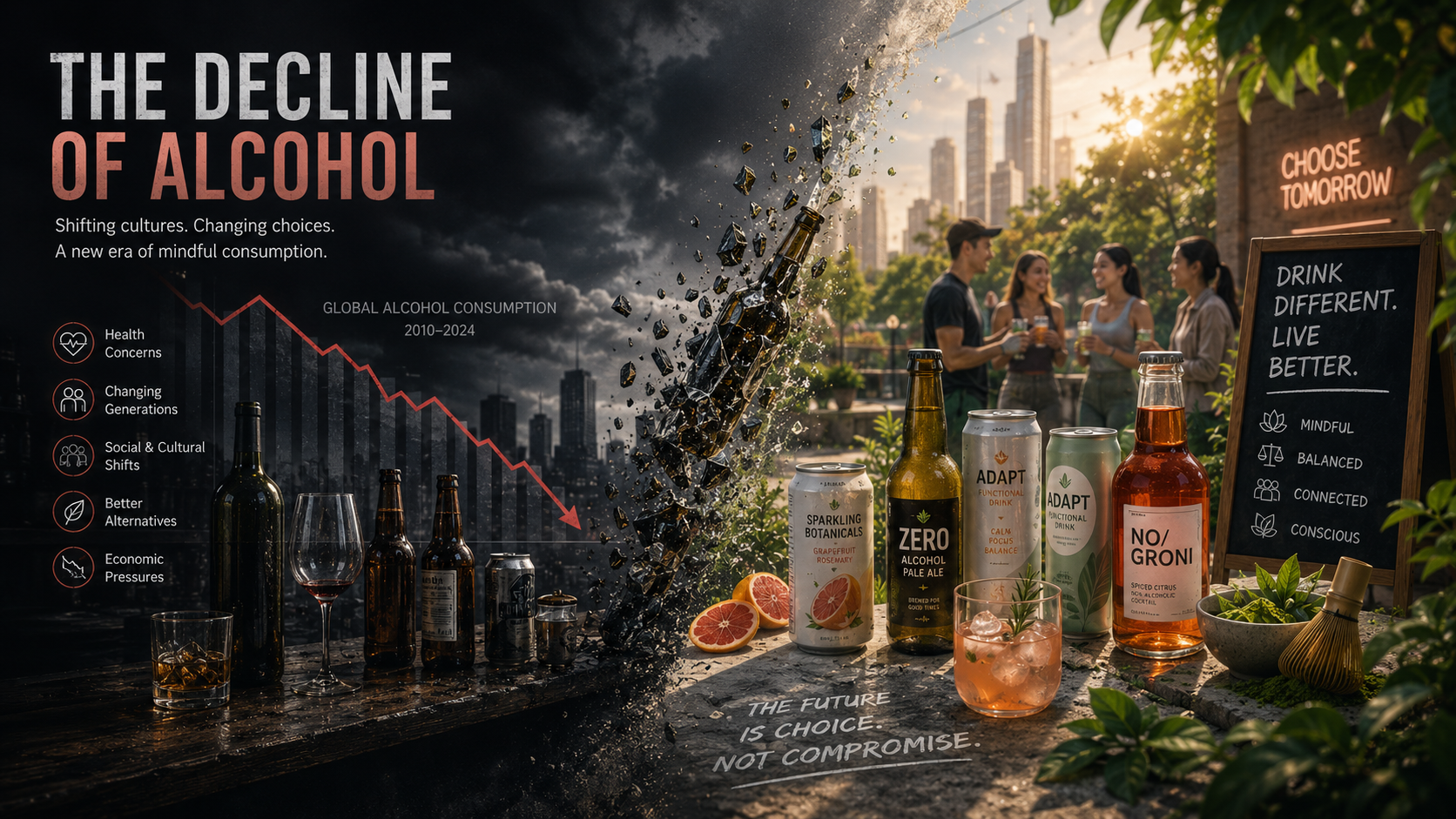
The Decline of Alcohol
The Decline of Alcohol Alcohol is losing its cultural monopoly For most of modern history, alcohol occupied a privileged social position. Celebration meant alcohol. Networking meant alcohol. Dating meant alcohol. Luxury meant alcohol. Adulthood itself often meant alcohol. Entire industries, rituals, and social structures were built around it. Now something unusual is happening. Younger generations are drinking less. Not slightly less. Structurally less. And the implications stretch far beyond beverage sales. Because alcohol is not merely a product category. It is a cultural system. When consumption patterns shift, culture shifts with them. _______________________________________ Gen Z changed the social equation One of the clearest drivers behind alcohol decline is generational behaviour. Gen Z approaches alcohol differently from previous generations. Historically, drinking symbolised freedom, rebellion, social belonging, and adulthood. But younger consumers grew up inside permanently documented digital environments. Every mistake can become content. Every bad night can become searchable. That changes risk perception. Previous generations could disappear into the night. Gen Z grew up under surveillance culture. Social media made self-image permanent. Which means losing control publicly became far less attractive. Sobriety increasingly signals discipline, wellness, productivity, and self-awareness. That is a dramatic cultural reversal. _______________________________________ Wellness became status This may be the biggest transformation of all. For decades, excess signalled status. Luxury dining. Expensive whiskey. Champagne culture. Late nights. Now optimisation signals status. Fitness. Sleep quality. Mental clarity. Cold plunges. Protein intake. Longevity. Performance. The modern aspirational consumer increasingly treats the body less like something to indulge and more like something to manage strategically. Alcohol conflicts with that mindset. It damages sleep. Hurts recovery. Impacts mental performance. In wellness-oriented cultures, alcohol increasingly behaves like friction. Not aspiration. _______________________________________ Consumers still want the ritual Important nuance. People are not necessarily rejecting social ritual. They are rejecting intoxication. That distinction explains the explosive growth of: • Non-alcoholic spirits • Functional beverages • Adaptogenic drinks • Premium sparkling water • Sophisticated zero-proof cocktails • Wellness beverages Consumers still want social participation. They still want ceremony. They still want identity signalling. But increasingly without the physical cost. The opportunity therefore is not simply “less alcohol.” It is replacement ritual. The brands understanding this shift earliest are winning aggressively. _______________________________________ Alcohol branding stopped evolving culturally Many alcohol brands still communicate using outdated emotional frameworks. Nightlife. Partying. Escape. Masculinity. Excess. Traditional luxury. But culture moved. Especially online. Modern consumers increasingly value: • Authenticity • Wellness • Mental health • Balance • Productivity • Emotional intelligence • Self-control The emotional codes surrounding alcohol therefore feel increasingly disconnected from emerging identity systems. Especially among younger urban audiences. _______________________________________ The internet changed social behaviour Historically, drinking often functioned as social infrastructure. Bars. Clubs. Parties. Shared physical environments. But digital life transformed socialisation itself. Gaming. Discord. Streaming. Group chats. Creator ecosystems. Online communities. Many younger consumers now socialise extensively without physical nightlife environments. That reduces alcohol exposure naturally. The relationship between social connection and drinking weakens. That structural change matters enormously. _______________________________________ Economic pressure also matters Alcohol is expensive. Especially premium alcohol. In many cities, nightlife itself became economically difficult for younger consumers. High rent. Economic instability. Rising living costs. Expensive hospitality. The economics of frequent drinking no longer feel sustainable for many consumers. At the same time, younger audiences increasingly prioritise experiences differently. Travel. Fitness. Technology. Fashion. Self-development. Alcohol now competes against a broader range of lifestyle spending categories than it once did. And increasingly, it loses. _______________________________________ Sobriety lost its stigma Historically, refusing alcohol often required explanation. Now moderation increasingly feels socially acceptable. Or even aspirational. That is culturally significant. Movements like “sober curious” helped normalise reduced drinking without requiring full sobriety identity. Consumers no longer see alcohol choices as binary. They fluidly move between drinking and non-drinking occasions. This flexibility weakens habitual consumption patterns. Which historically drove enormous portions of industry revenue. _______________________________________ Premiumisation may save parts of the industry Ironically, while total consumption may decline, premiumisation may still strengthen profitability for some brands. Consumers increasingly drink less frequently but more selectively. That creates opportunities for: • Craft products • High-end spirits • Luxury positioning • Experiential hospitality • Collectible consumption The future alcohol market may therefore become smaller in volume but stronger in premium value. Mass consumption weakens. Occasion-based consumption strengthens. _______________________________________ The future of alcohol is identity repositioning The biggest challenge facing alcohol brands is not operational. It is emotional. They must redefine what alcohol means culturally. Because the old narratives are losing power. Future successful alcohol brands may need to position around: • Craftsmanship • Taste sophistication • Moderation • Ritual • Experience • Social connection • Wellness balance Not reckless excess. The industry is slowly moving from intoxication marketing toward lifestyle integration. That transition will define the next decade. _______________________________________ Closing Alcohol is not disappearing. But its cultural dominance is weakening. Younger generations are reshaping consumption through wellness culture, digital behaviour, economic pressure, and changing social identity systems. The future consumer increasingly values optimisation over excess. Control over escapism. Function over intoxication. And the brands that survive will not simply sell alcohol. They will sell modern social ritual. Because increasingly, consumers still want connection. They just no longer want the hangover.
MAY 25, 2026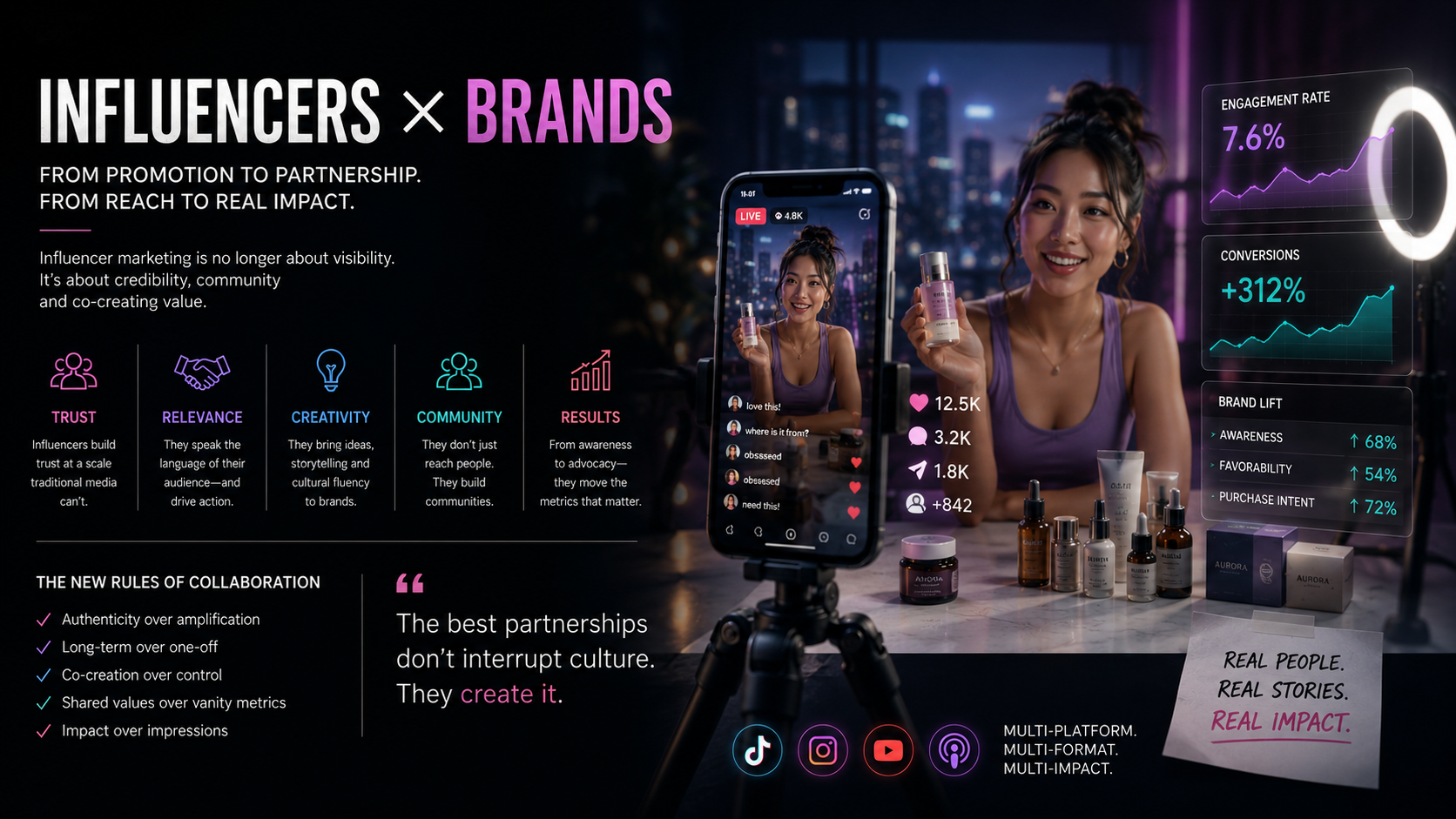
Influencers x Brands
Influencers x Brands Influencers are no longer media channels This is where many companies still misunderstand the creator economy. Influencers are not merely advertising placements anymore. They are media brands. Cultural distributors. Trust systems. Entertainment ecosystems. In some cases, more powerful than traditional publishers. For years, brands approached influencers like rented attention. Pay for post. Track impressions. Measure engagement. Move on. That model still exists. But the creator economy evolved far beyond campaign mechanics. Today, creators increasingly shape purchasing behaviour, aesthetic trends, language, cultural relevance, and even product development itself. The relationship between influencers and brands is no longer tactical. It is structural. _______________________________________ Trust fragmented away from institutions Historically, large institutions controlled public influence. Television networks. Magazines. Celebrities. Publishers. Brands themselves. Social media fragmented that system. Consumers increasingly trust individuals more than corporations. Especially younger audiences. Creators feel human. Immediate. Relatable. Consistent. Audiences follow them daily. Sometimes for years. That repeated exposure creates intimacy. And intimacy creates persuasion. This is why creator recommendations often outperform polished corporate advertising dramatically. The message feels socially transferred rather than commercially delivered. That distinction matters. _______________________________________ Influence became infrastructure Many industries now rely heavily on creators for discovery. Beauty. Fashion. Food. Technology. Fitness. Travel. Gaming. Books. Even finance. Consumers increasingly encounter products through creator ecosystems before encountering traditional advertising. This reverses historical marketing flow. The creator often introduces the brand first. The brand validates later. Which means creators now operate as discovery infrastructure. Not merely amplification. _______________________________________ The strongest creators behave like brands Ironically, the best influencers increasingly resemble companies. Distinctive visual identity. Recognisable tone. Audience positioning. Community behaviour. Merchandise. Products. Recurring content systems. The strongest creators build emotional consistency over time. That consistency generates loyalty. Which eventually converts into economic power. Many creators are now launching: • Beverage brands • Skincare brands • Fashion labels • Supplements • Technology products • Education platforms Because audience ownership became more valuable than media buying. _______________________________________ Most brand collaborations still feel transactional This remains one of the biggest weaknesses in influencer marketing. Too many partnerships still feel obviously commercial. Forced scripts. Awkward integration. Overcontrolled messaging. Audiences recognise this instantly. The strongest creator-brand relationships feel native to the creator’s existing world. The product fits naturally. The communication style remains authentic. The creator retains creative control. That flexibility matters enormously because creators understand their audience dynamics better than most brand managers do. _______________________________________ Attention is shifting from polished to personal Traditional advertising optimised polish. Creators optimise connection. That is why low-production creator content often outperforms expensive campaigns. Consumers increasingly prioritise: • Relatability • Personality • Realness • Entertainment • Emotional immediacy Over corporate perfection. This does not mean quality disappeared. It means emotional realism became more persuasive than visual polish alone. Brands still operating entirely through traditional advertising language increasingly feel distant online. _______________________________________ The algorithm changed influence economics Historically, celebrities required mass visibility. Today algorithms can create micro-celebrities at enormous scale. Niche influence became commercially viable. A creator with 50,000 highly engaged followers may now outperform a celebrity with millions of passive followers. Why? Because specificity creates trust. And trust drives conversion. This fundamentally changes how brands should think about partnerships. Mass reach alone is becoming less important than audience relevance. _______________________________________ Influencers are becoming product collaborators The relationship is evolving again. Brands increasingly involve creators earlier in development. Not just promotion. Because creators understand audience psychology in real time. They receive immediate behavioural feedback daily. Comments. Questions. Engagement patterns. Trend signals. This makes creators surprisingly valuable as cultural intelligence systems. Many companies still underestimate this. They treat creators as distribution. When increasingly they should also be treated as insight infrastructure. _______________________________________ The future belongs to ecosystem partnerships One-off sponsorships are weakening. Long-term ecosystem relationships are strengthening. The strongest future partnerships will likely involve: • Product co-creation • Community integration • Shared storytelling • Ongoing collaboration • Audience participation • Event experiences • Platform ecosystems Why? Because audiences increasingly prefer continuity. Not isolated campaigns. Brands behaving like temporary guests inside creator worlds feel forgettable. Brands contributing consistently to those worlds feel culturally embedded. That difference matters. _______________________________________ Creators are replacing parts of traditional advertising Not completely. But meaningfully. Large campaign production still matters. Brand building still matters. Mass media still matters. But creators increasingly dominate: • Discovery • Recommendation • Cultural relevance • Product education • Community behaviour • Trend acceleration Which means modern marketing systems increasingly require hybrid structures. Traditional brand strategy combined with creator-native execution. The companies understanding this balance earliest will likely dominate attention. _______________________________________ Closing The creator economy is no longer a side channel. It became one of the central operating systems of modern consumer culture. Influencers now shape discovery, trust, purchasing behaviour, aesthetics, and identity at global scale. The brands that succeed in this environment will not treat creators like rented billboards. They will treat them like cultural partners. Because increasingly, influence itself became infrastructure. And the future of branding belongs to the companies capable of participating naturally inside the communities where attention already lives.
MAY 25, 2026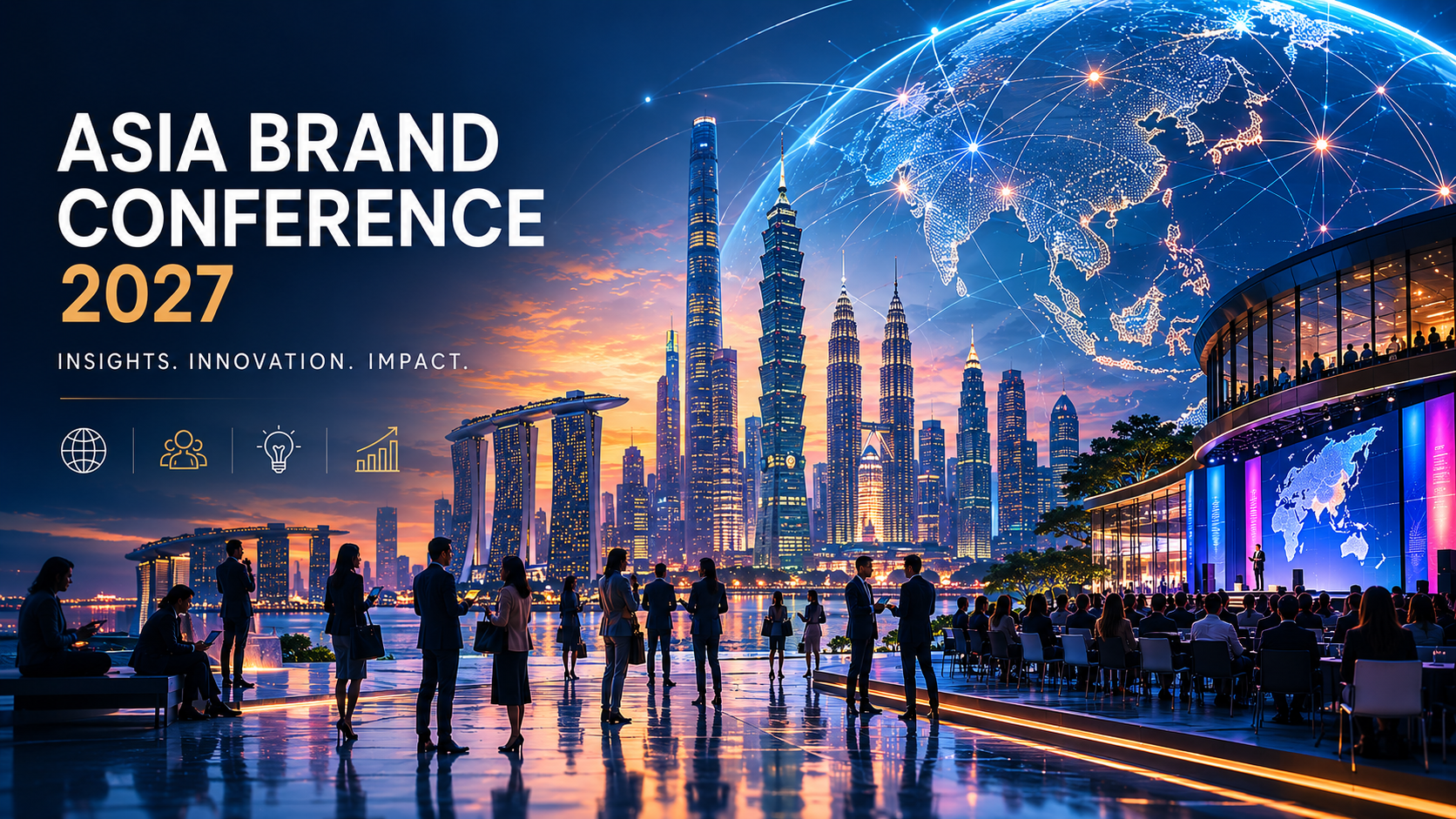
Asia Brand Conference 2027
Asia Brand Conference 2027 Asia is no longer following global branding trends It is increasingly creating them. For years, global branding conversations were dominated by Europe and the United States. Western agencies defined the frameworks. Western case studies shaped the industry. Western consumer behaviour drove strategy models. That era is shifting. Asia is becoming one of the most important brand laboratories in the world. Not simply because of population size. But because of behavioural speed. Digital adoption. Platform innovation. Commerce integration. Mobile ecosystems. Creator economies. Social behaviour. Consumer intensity. The future of branding may increasingly be previewed in Asia first. Then exported globally later. _______________________________________ Asia operates at internet speed Many Asian markets evolved digitally under different conditions from Western economies. In several regions, mobile technology leapfrogged traditional infrastructure entirely. Consumers adapted quickly. Which created unusually advanced digital behaviour. Social commerce. Livestream shopping. Super apps. Integrated payment ecosystems. Creator-driven retail. Gamified commerce. These behaviours became normal in parts of Asia years before Western markets fully understood them. This matters enormously because branding increasingly behaves like platform interaction rather than traditional advertising. And Asia already operates comfortably inside that environment. _______________________________________ The future consumer is hybrid One of Asia’s greatest strategic advantages is behavioural hybridity. Consumers move fluidly between: • Physical and digital commerce • Luxury and street culture • Global and local identity • Tradition and futurism • Community and individualism This creates unusually dynamic consumer environments. Brands therefore need to operate with far greater cultural flexibility. Rigid Western-style brand systems often struggle in these conditions. Asian markets reward adaptability. Speed. Local nuance. Emotional intelligence. _______________________________________ Asian consumers are highly platform-native This is another critical difference. In many Asian markets, consumers are deeply integrated into platform ecosystems daily. Shopping, messaging, entertainment, payments, creator interaction, delivery, gaming, and community behaviour often happen inside interconnected digital systems. This changes how brands function. Branding becomes less about isolated campaigns and more about ongoing ecosystem participation. The brand is not merely communicating. It is continuously interacting. That interaction-heavy environment creates important lessons for the future global economy. _______________________________________ Creator culture is accelerating faster in Asia Asian creator ecosystems are evolving rapidly. Particularly across: • Beauty • Fashion • Gaming • Food • Technology • Lifestyle commerce Creators increasingly function as retail infrastructure, community leaders, and cultural translators simultaneously. This deeply influences purchasing behaviour. The distinction between influencer, entrepreneur, entertainer, and retailer continues collapsing. Asia is not merely participating in this shift. It is accelerating it. _______________________________________ Asian branding is becoming visually bolder Historically, much global premium branding followed minimalist Western design language. Clean. Muted. Restrained. Many emerging Asian brands behave differently. More expressive. More energetic. More digitally native. More comfortable with intensity. This reflects broader internet culture shifts. Modern consumers increasingly encounter brands through screens first. Which rewards visual impact. Motion. Colour. Distinctiveness. Asia’s digital ecosystems adapted aggressively to those realities. _______________________________________ The luxury market is shifting east Luxury itself is increasingly shaped by Asian consumer behaviour. Travel. Fashion. Beauty. Hospitality. Premium experiences. The influence of Asian purchasing power continues growing globally. Which means understanding Asian cultural dynamics is no longer optional for international brands. It is strategic necessity. Brands that fail to understand this shift risk building for outdated consumer assumptions. _______________________________________ Asia is becoming a strategic branding hub The future importance of conferences like Asia Brand Conference 2027 is not symbolic. It is structural. Because the branding industry increasingly needs: • Cross-market intelligence • Platform-native thinking • Creator economy understanding • Cultural agility • Digital ecosystem strategy • AI integration frameworks • Consumer behaviour forecasting Asia sits directly at the intersection of many of these transformations. Which makes the region strategically important not merely as a market. But as a predictive environment. _______________________________________ The next era of branding will be multi-polar The future brand economy will not be dominated by one cultural centre. It will become increasingly multi-polar. Ideas will emerge simultaneously from: • Seoul • Bangkok • Singapore • Shanghai • Tokyo • Jakarta • Mumbai • Dubai • Los Angeles • London This decentralisation changes the entire industry. Global branding increasingly means understanding multiple behavioural systems simultaneously. The companies capable of navigating those complexities will dominate. _______________________________________ The future belongs to adaptive brands The biggest lesson emerging from Asia may be this: Modern brands cannot remain static. Consumers move too quickly. Platforms evolve too rapidly. Culture shifts too aggressively. The future strongest brands will likely behave like adaptive systems. Flexible. Interactive. Community-driven. Platform-native. Culturally responsive. That evolution is already visible across many Asian markets. _______________________________________ Closing Asia is no longer simply adopting global branding frameworks. It is increasingly shaping the future direction of the industry itself. The region’s speed of digital behaviour, platform integration, creator ecosystems, and cultural hybridity make it one of the most important strategic environments in the modern consumer economy. The future of branding will likely be faster, more interactive, more community-driven, and more digitally immersive than the industry historically expected. And increasingly, many of those future behaviours are appearing in Asia first. The brands paying attention now will have advantage later. Because the future global consumer may already exist somewhere inside Asia’s digital ecosystems today.
MAY 25, 2026